.png)
The Pennsylvania German traditions surrounding Kutztown extend into Berks County, Lehigh County and beyond.
Drive west from the Lehigh Valley toward Kutztown and Reading and something begins to change.
The cities thin out.
Fields stretch farther.
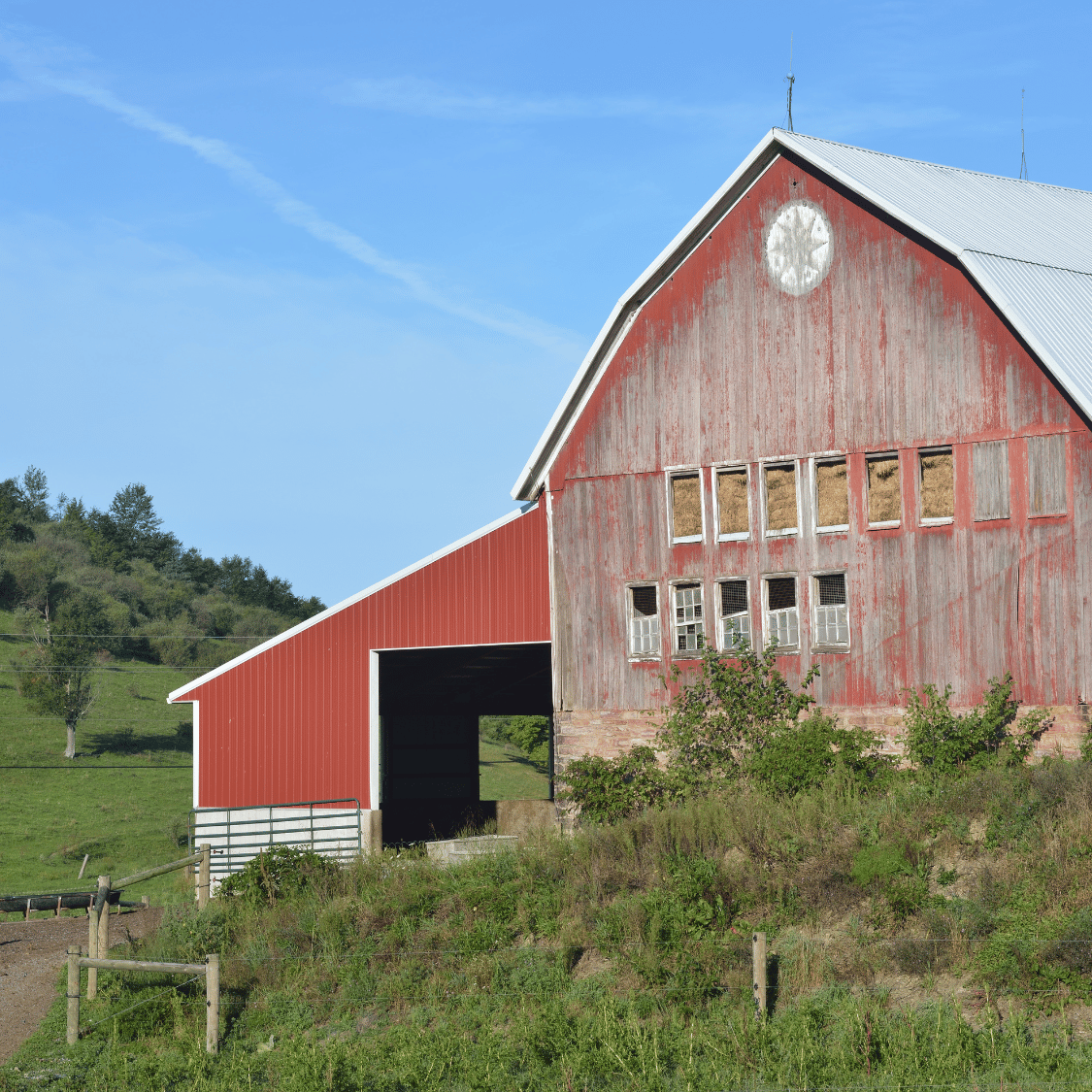
Old Pennsylvania barns appear along the road.
And if you're paying attention, you'll start seeing circles.
Eight-pointed stars. Tulips. Hearts. Birds. Geometric patterns painted in bright reds, blues, yellows and greens.
Most of us have driven past them hundreds of times.
We call them hex signs.
But the deeper story of Pennsylvania's barn stars is considerably more interesting than the name suggests—and it may be one of the strongest visual clues that you've entered a cultural region unlike anywhere else in America.
Welcome to another layer of University Valley.
Every region eventually develops a visual language.
New England has saltbox houses.
The Southwest has adobe.
New Orleans has wrought-iron balconies.
Here, one of our most recognizable symbols is painted high on the side of a barn.
Pennsylvania Dutch barn stars became one of the region's most publicly recognized forms of folk art, particularly across Berks and Lehigh counties. Their history, symbolism and mythology have become serious subjects of folklife research.
And Kutztown happens to sit near the intellectual center of that work.
The Pennsylvania German Cultural Heritage Center at Kutztown University of Pennsylvania is an open-air folklife museum and research center dedicated to Pennsylvania German history, culture and language. Its scholarship covers everything from barn stars and traditional foodways to Pennsylvania barns, dialect, folk healing and the experiences of people who grew up Pennsylvania Dutch.
That's an extraordinary collection of cultural knowledge sitting in our backyard.
Here's where the story gets interesting.
Many people grew up hearing that the symbols painted on Pennsylvania barns were magical signs intended to bring luck or ward off evil.
The reality is more complicated.
Scholars have explored the symbols through religious, celestial and decorative traditions, while contemporary popular culture helped attach layers of mythology to what became known broadly as "hex signs." The decorated barns themselves are part of a much larger Pennsylvania German visual tradition.
That's why we prefer another term you'll hear frequently from people who study and preserve the tradition:
Barn stars.
Look closely at enough of them and you'll realize they aren't all the same.
Some are intensely geometric.
Others incorporate birds, flowers or hearts.
Some feel almost modern.
That's perhaps the biggest surprise.
Remove the barn and you could imagine certain designs hanging in a contemporary art gallery.
Yet here they are, painted several stories above a cornfield.
This is where Kutztown becomes particularly interesting.
Most college towns are places where the new arrives constantly.
New students.
New ideas.
New technology.
New people.
Kutztown is all of those things.
But it is also home to an institution actively documenting what came before.
That creates a fascinating tension: a university community helping preserve the traditions of the rural landscape surrounding it.
The story stretches well beyond the campus.
In 1950, folklorists Alfred L. Shoemaker, J. William Frey and Don Yoder helped establish the Kutztown Folk Festival. University archival material describes it as the first folklife festival in the country and notes its influence on later folklife festivals, including the Smithsonian Folklife Festival.
Think about that for a moment.
A national movement to take everyday culture seriously—to document people's crafts, music, language, food and traditions—has important roots in Kutztown.
That's not merely local history.
That's a University Valley story worth telling.
The next time you're driving the back roads between Kutztown, Fleetwood, Oley and the western Lehigh Valley, put the phone down.
Look at the barns.
Not just the colorful ones.
Notice their size.
Their stone foundations.
Their relationship to the farmhouse.
Look for the stars.
Then imagine someone standing on scaffolding high above the ground, carefully painting those enormous patterns by hand.
Traditional barn artist Eric Claypoole, for example, has painted more than 100 barns during his career, according to Kutztown University's Pennsylvania German Cultural Heritage Center.
Suddenly, something you've passed your entire life looks different.
That's what good local storytelling should do.
We're used to defining regions with borders.
Counties.
Zip codes.
School districts.
But culture rarely respects those lines.
The Pennsylvania German traditions surrounding Kutztown extend into Berks County, Lehigh County and beyond. The colleges and universities of our region bring new generations into these communities. Farms sit beside subdivisions. Old barns overlook highways carrying thousands of commuters every morning.
All of it overlaps.
That's the University Valley we find most interesting.
Not a neatly drawn place on a map.
A place connected by stories.
So the next time you see a colorful star painted high on an old barn, look twice.
You aren't just looking at decoration.
You're looking at a small piece of the visual language of this place—and one more reason University Valley doesn't look quite like anywhere else.
Learn more and plan a visit through the Pennsylvania German Cultural Heritage Center at Kutztown University.

%20(1).png)
.png)

.png)
.png)